

What Is Lothal Maritime Heritage? A Complete Guide
Lothal is one of the most significant archaeological sites of the Indus Valley Civilization, and it now forms the historical foundation for one of India’s most ambitious cultural infrastructure projects — the Dholera National Maritime Heritage Complex (NMHC). Here is an informational look at the site’s history, the project’s vision, and its phased development.
What Is Lothal?
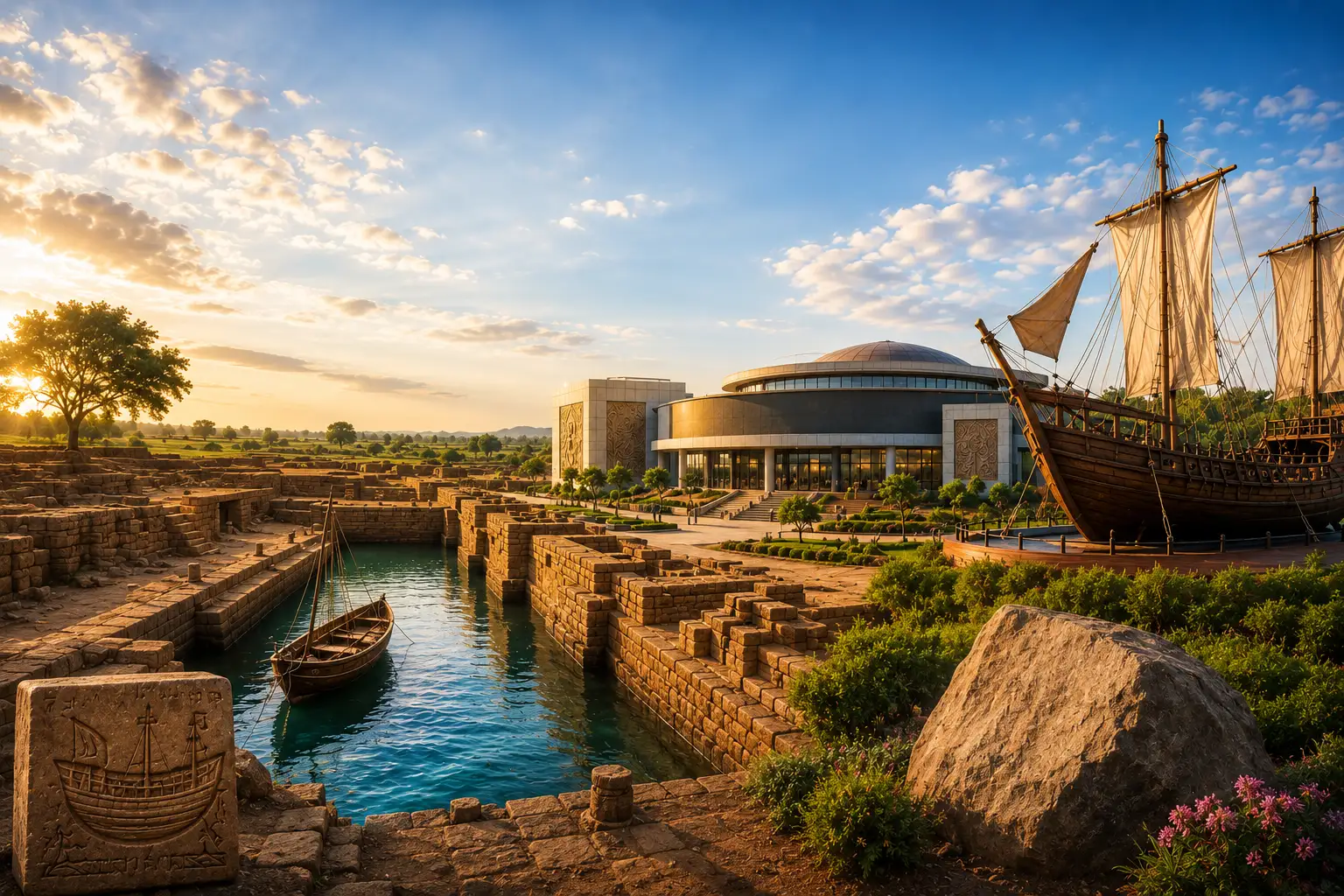
Lothal is an ancient city dating back to 2400 BCE, recognized as one of the earliest known dockyards in the world. It was located near an ancient course of the Sabarmati River, a position that allowed it to serve as a hub for maritime trade with distant regions. Archaeological excavations at the site have revealed:
- A grid-like street layout indicating advanced urban planning
- Sophisticated drainage systems built centuries ahead of comparable civilizations
- A purpose-built dockyard reflecting advanced engineering and knowledge of tidal patterns
These features establish Lothal as a center of both commercial activity and technical innovation during the Harappan period.
What Is the Dholera National Maritime Heritage Complex?
The NMHC is a large-scale heritage and tourism project built to commemorate Lothal’s maritime legacy. It is designed to document and celebrate India’s seafaring history from the Indus Valley period through to the modern era.
Core Objectives
Objective | Description |
Heritage Preservation | Showcases India’s history in seafaring, shipbuilding, and navigation |
Education | Provides a platform for research and knowledge-sharing on maritime history and science |
Tourism Development | Positions Lothal as a world-class heritage tourism destination |
International Collaboration | Enables cultural and academic exchange with other maritime nations |
Development Timeline: Phases of the NMHC
The project is being built in three major phases.
Phase 1A — Foundational Museum Complex
- Covers 35 acres
- Houses themed galleries, including:
- Oceanic Mythology and Maritime Traditions
- The Harappan Seafarers and Trade Networks
- Climate Change’s Impact on Post-Harappan Civilization
- India’s Contact with the Greco-Roman World
- A Naval Gallery and rotating special exhibitions
Phase 1B — Expanded Visitor Experience
- Adds a Lighthouse Museum
- Introduces a 5D Dome Theatre
- Develops the Bagicha Complex
- Focuses on interactive, entertainment-driven attractions
Phase 2 — Full-Scale Heritage Destination
- Recreated Lothal City: A detailed physical reconstruction of ancient Lothal, including its dockyards, warehouses, and urban infrastructure
- State Pavilions: Exhibits highlighting the maritime traditions of India’s coastal states
- Theme Parks: Covering adventure, amusement, and climate change awareness
- Eco-Resorts and Maritime Institutes: Combining tourism with ongoing research and education
Why This Project Matters
The NMHC is significant for several reasons:
- Historical Recognition — It formally acknowledges Lothal’s role as a pioneer of maritime engineering nearly 4,000 years ago.
- Educational Value — It creates a dedicated space for maritime research that did not previously exist at this scale in India.
- Economic and Tourism Impact — The complex is expected to establish Lothal as a major heritage tourism destination, generating regional economic benefits.
- Global Positioning — By combining research, exhibitions, and international collaboration, the NMHC aims to place India among the world’s leading centers for maritime history and science.
Key Facts at a Glance
- Site: Lothal, Gujarat, India
- Historical Period: Indus Valley Civilization, circa 2400 BCE
- Project Name: Dholera National Maritime Heritage Complex (NMHC)
- Phase 1A Area: 35 acres
- Development Structure: Three phases (1A, 1B, and 2)
Conclusion
The Dholera National Maritime Heritage Complex is more than a museum — it is a comprehensive effort to reconnect India with its maritime origins. By anchoring the project in the historical achievements of Lothal, the NMHC bridges ancient engineering with modern tourism, education, and international cultural exchange.
FAQ
What is Lothal?
An Indus Valley Civilization city (c. 2400 BCE) in Gujarat, home to one of the world’s earliest known dockyards.
Why is it significant?
It shows advanced urban planning — grid streets, drainage systems, and dockyard engineering — reflecting sophisticated Harappan-era maritime trade.
What is the NMHC?
The Dholera National Maritime Heritage Complex — a heritage project honoring Lothal’s legacy through museums, research, and tourism.
What are its main goals?
Preserve maritime heritage, support education and research, boost heritage tourism, and enable international collaboration.
How is it being built?
In three phases — 1A (35-acre museum with themed galleries), 1B (Lighthouse Museum, 5D theatre, Bagicha Complex), and 2 (Recreated Lothal City, state pavilions, theme parks, eco-resorts).