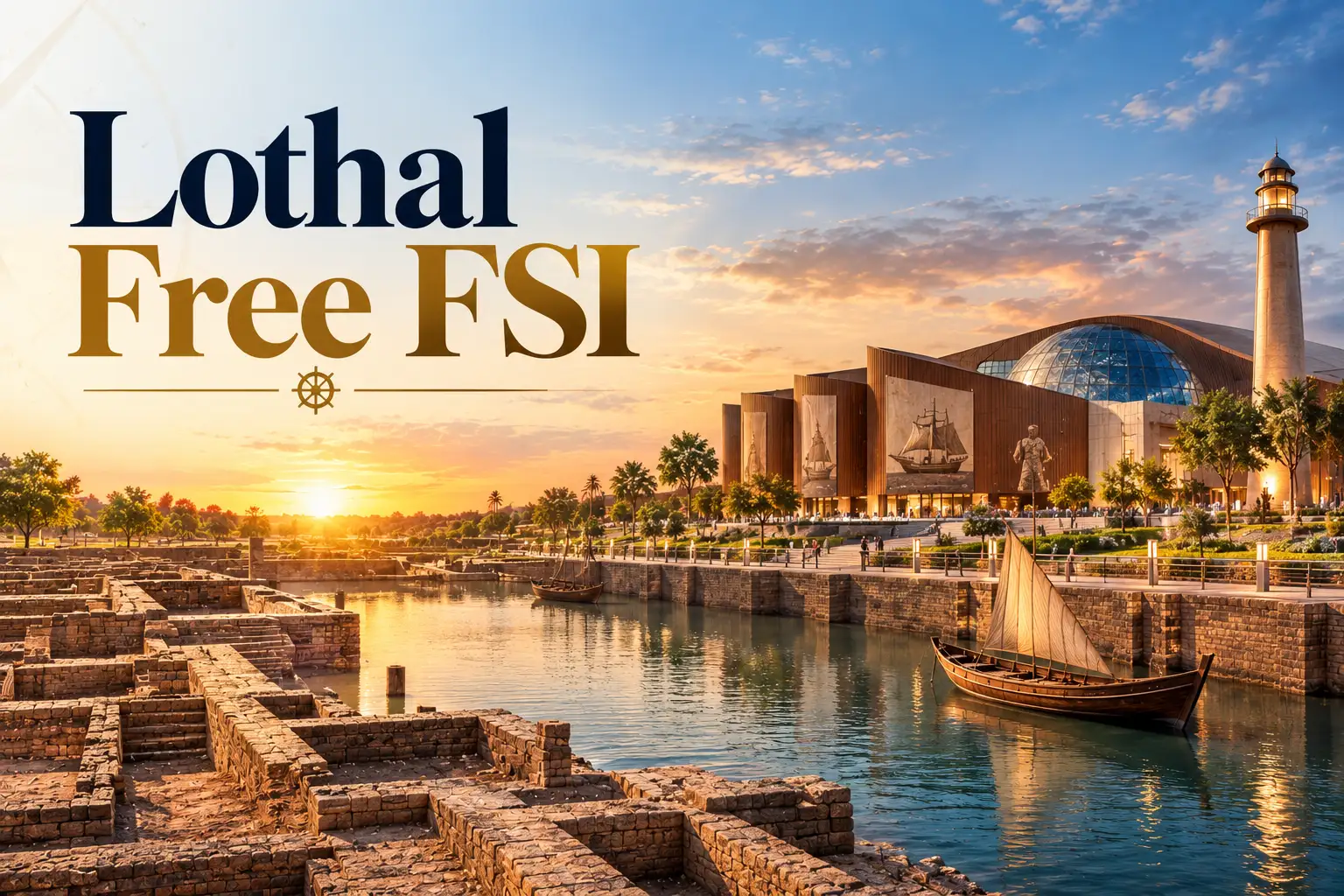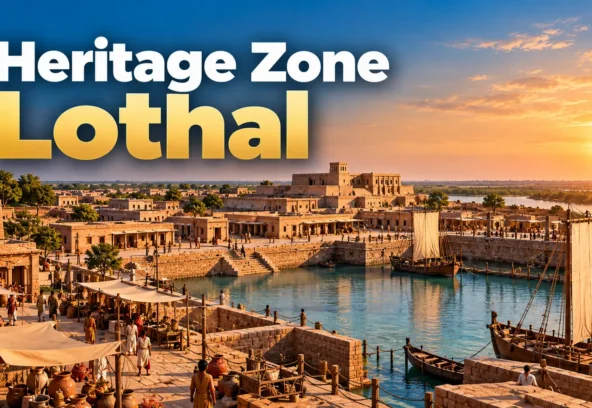

Over 4,000 years ago, ships loaded with beads, cotton and copper sailed out of a small port town in Gujarat. That town was Lothal.
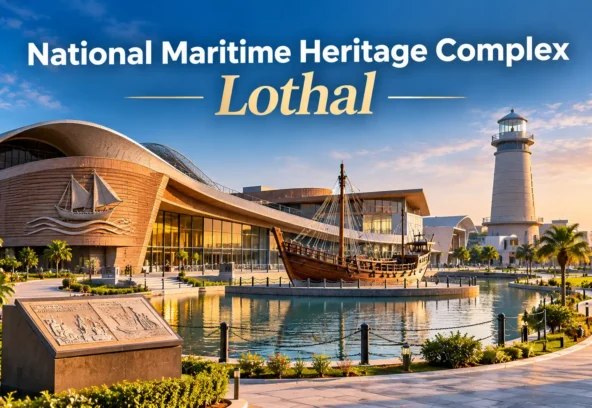
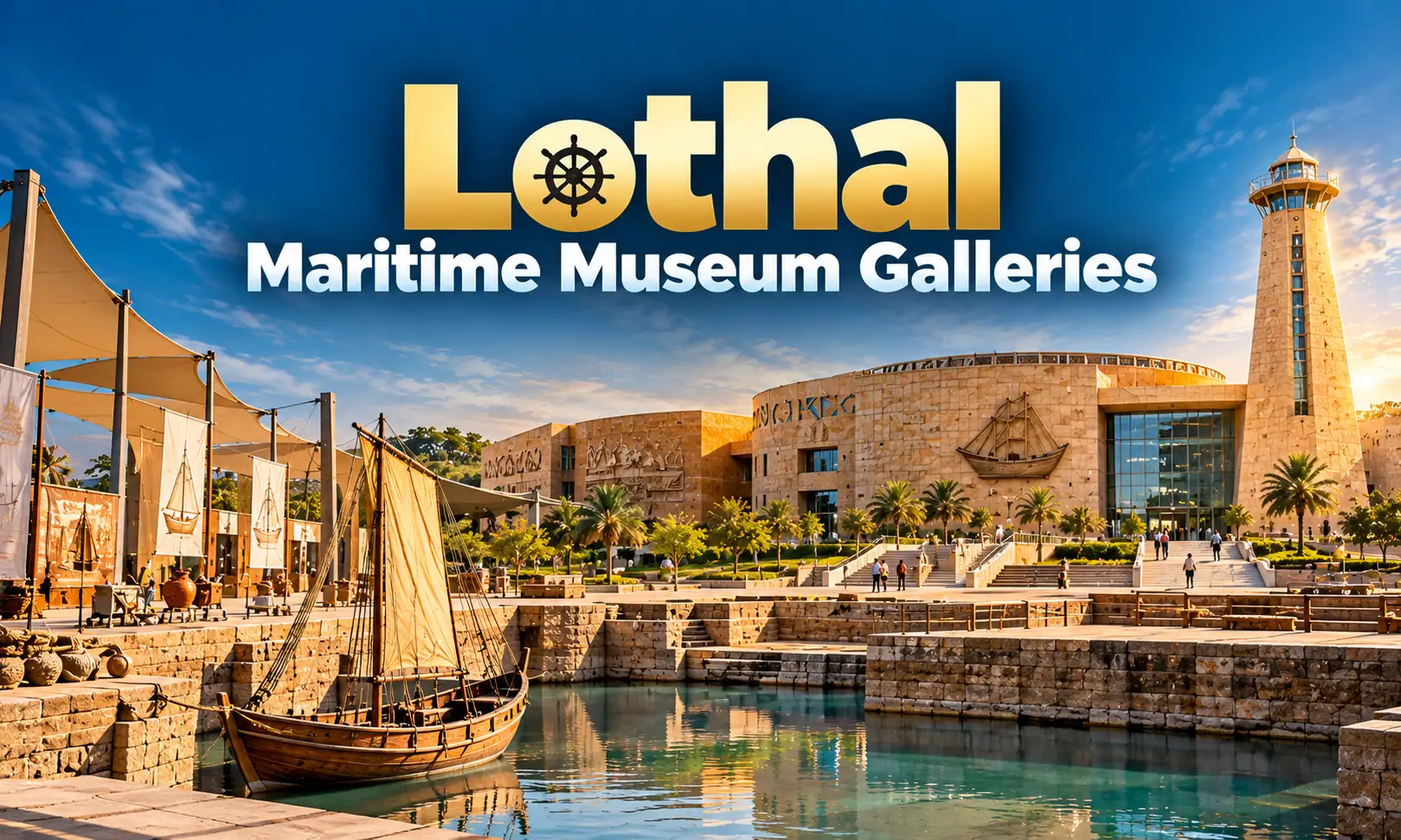
Today, the same land is home to one of India’s most ambitious heritage projects: the National Maritime Heritage Complex (NMHC). At its heart is a museum with 14 themed galleries that trace India’s relationship with the sea.
This guide walks you through every gallery, what you can see, and why Lothal is fast becoming a must-visit destination in Gujarat.
Lothal: Where India’s Maritime Story Began
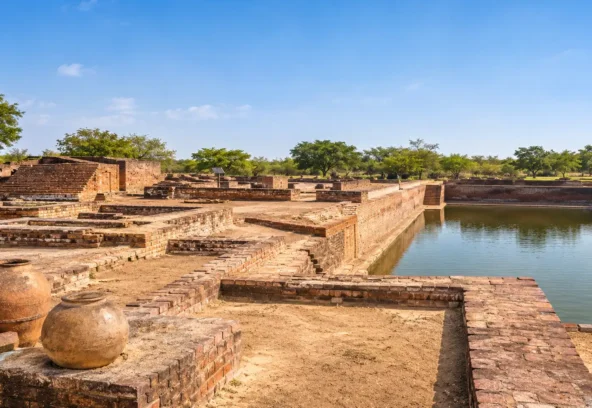
Lothal was one of the most important cities of the Harappan (Indus Valley) Civilisation. It sits in Ahmedabad district, close to the Gulf of Khambhat.
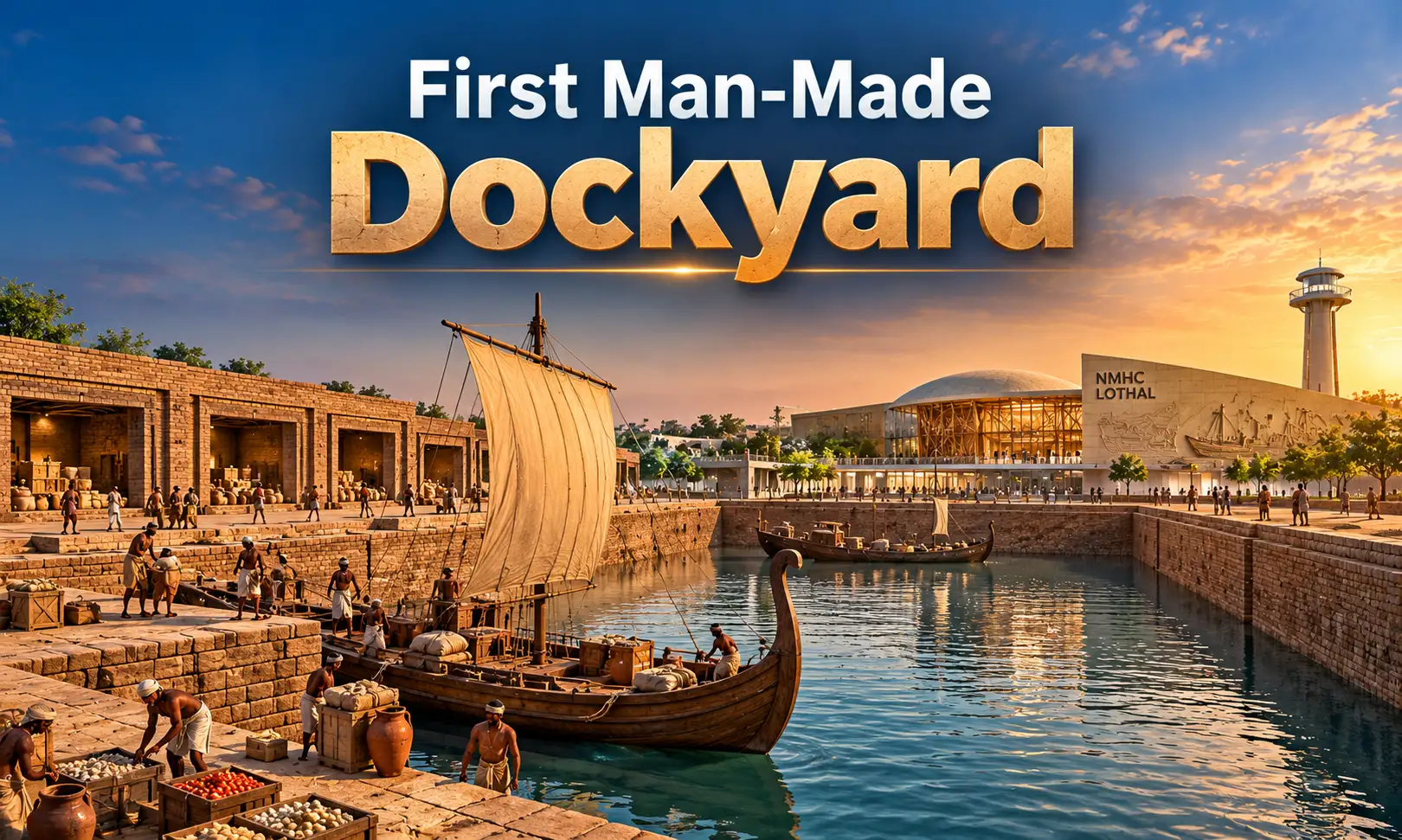
What makes Lothal special is its dockyard. Archaeologists consider it the earliest man-made dockyard ever excavated anywhere in the world.
Harappan traders used this port to send goods to distant lands, including the Persian Gulf, Oman and Mesopotamia. In many ways, India’s maritime history officially starts here.
That is exactly why the Government of India chose Lothal as the site for a national maritime museum.
What Is the National Maritime Heritage Complex (NMHC)?
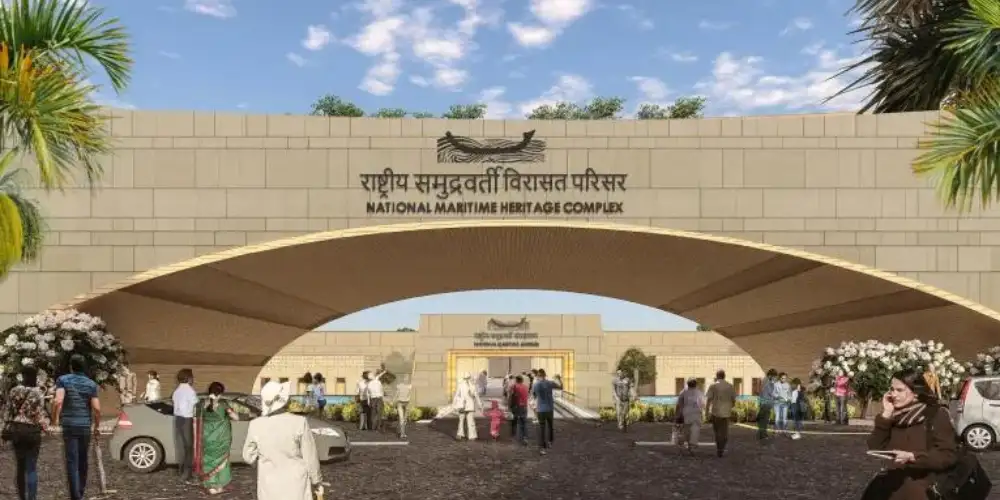
The NMHC is a large heritage and tourism project developed under the Ministry of Ports, Shipping and Waterways. Its official address is Lothal, Saragwala, Gujarat 382230.
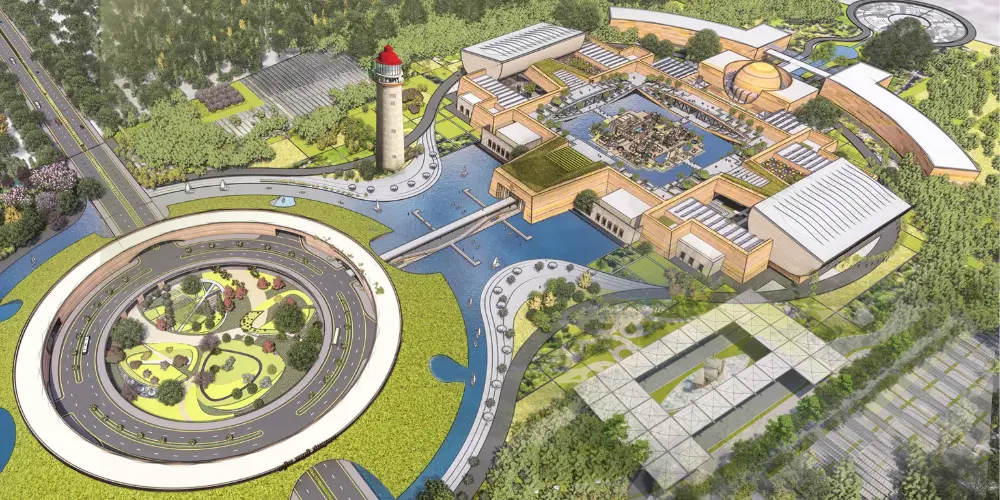
The complex is planned as much more than a museum. Its master plan includes:
- The National Maritime Museum with 14 galleries
- A recreated Lothal Town
- Naval warship and aircraft displays
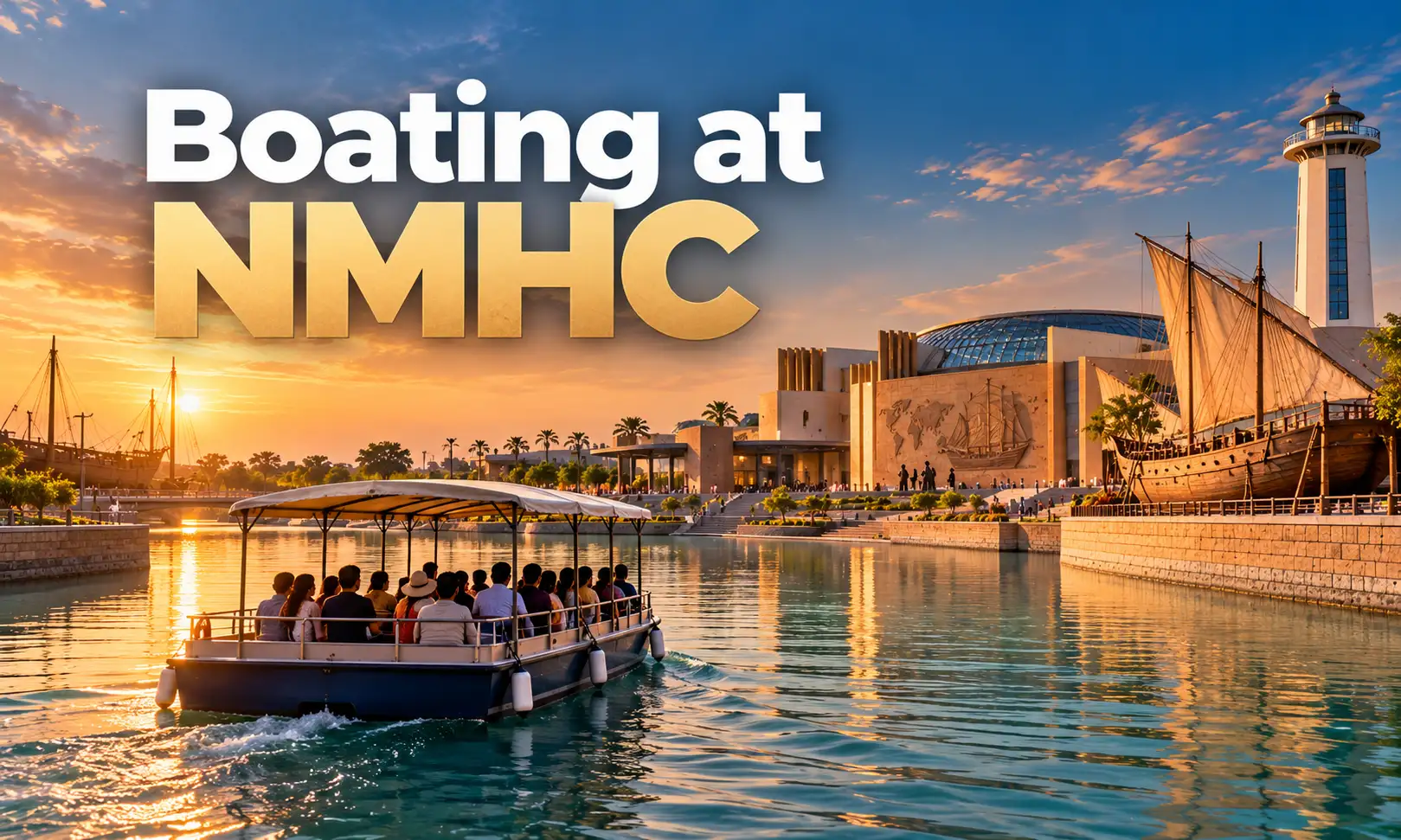
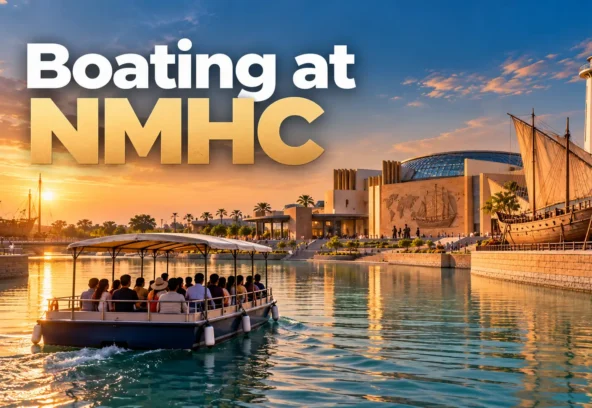
- Boating facilities
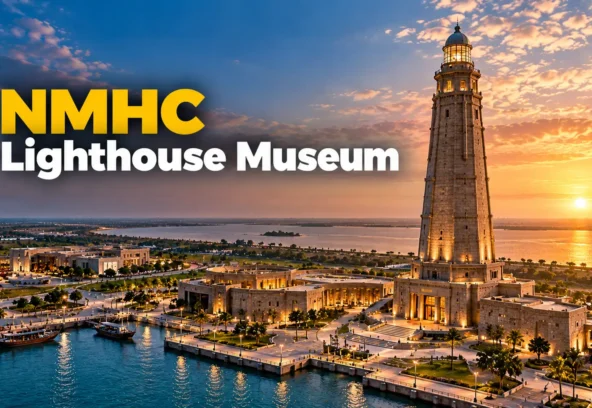
- A lighthouse museum and a 5D dome auditorium (planned)
- A heritage zone with coastal states pavilions (planned)
- Theme parks, eco-resorts and “museotels” (planned)
The goal is simple: to tell India’s 4,500-year maritime story in one place, in a way that is engaging for families, students and history lovers alike.
How Many Galleries Does the Lothal Maritime Museum Have?
The National Maritime Museum at NMHC has 14 galleries in total.
According to the official NMHC website, the galleries are grouped into two parts:
- Galleries 1 to 6 – listed under the National Maritime Museum (first phase)
- Galleries 7 to 14 – listed under future development
Together, they cover everything from ocean mythology and the Harappans to the Maratha Navy, European arrival and modern Indian shipping.
Let us explore each one.
Galleries 1 to 6: The First Phase
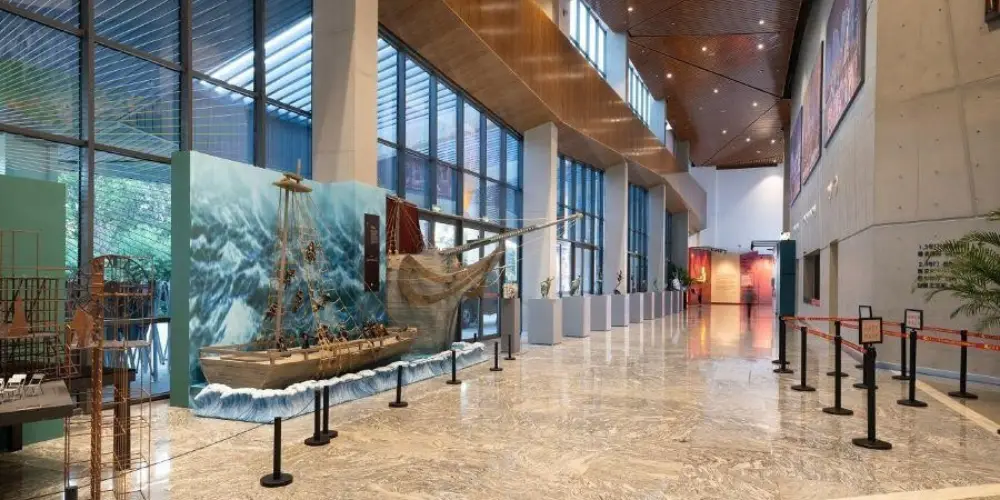
Gallery 1 – Orientation and Oceanic Mythologies
This is your starting point. Gallery 1 gives visitors a quick preview of all 14 galleries.
It also covers ocean science, underwater archaeology and Indian myths connected to the sea. Expect interactive storytelling and virtual tours along a cultural timeline. Ocean-related deities such as Vishnu, Varuna, Ganga and Yamuna are part of the display.
Gallery 2 – Harappans: The Pioneer Seafarers
This gallery is the soul of Lothal. It explores Harappan life, culture and trade.
You will learn how goods moved between the Indus region and the Persian Gulf, Oman, Mesopotamia and Egypt. Harappan port cities like Lothal and Dholavira, along with sites on the Makran coast, are also featured.
Gallery 3 – Post-Harappan Trajectories: Impact of Climate Change
What happened after the Harappan civilisation declined? Gallery 3 answers that question.
It follows the movement of people across the subcontinent and the spread of metal technologies. Ancient trade routes like Uttarapatha and Dakshinapatha, the rise of money-based trade and the development of scripts are covered here.
Gallery 4 – India’s Contact with the Greco-Roman World
This gallery looks at India’s sea links with the Greco-Roman world and Persian Gulf nations.
It highlights ports on both the east and west coasts, inland trade networks, market towns, mountain passes and Buddhist caves. It also shows how these contacts shaped culture and economies on both sides.
Gallery 5 – Special Exhibitions Gallery
Gallery 5 is a flexible space for temporary exhibitions and events.
It is designed with touchscreens and hands-on activities. NMHC plans to collaborate with cultural institutions, artists and community groups from around the world, so there will always be something new to see.
Gallery 6 – Evolution of the Indian Navy and Indian Coast Guard
A favourite for defence enthusiasts. This gallery traces the journey of the Indian Navy and Coast Guard.
It displays naval crafts, guns and equipment, and narrates famous naval battles. It also explains their peacetime roles, including protecting India’s maritime resources.
Galleries 7 to 14: Future Development
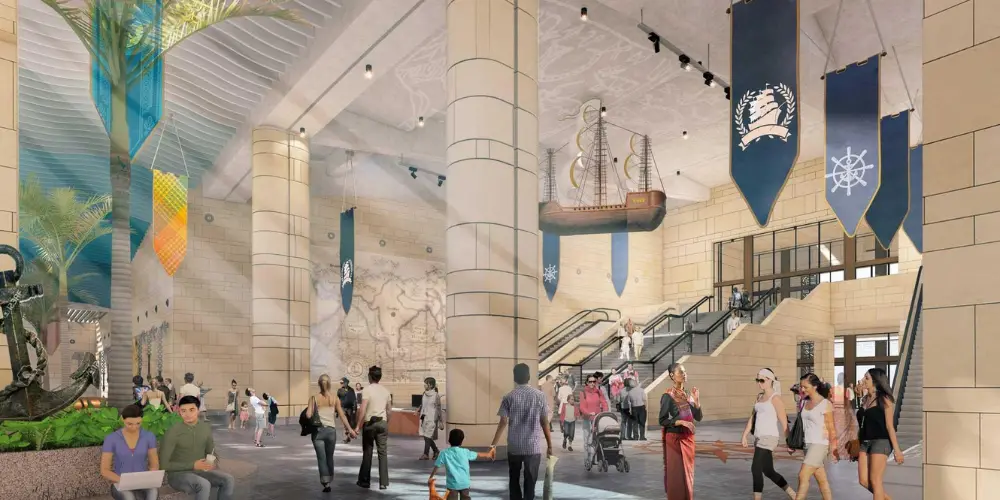
Gallery 7 – Trade and Cultural Relations with Southeast Asia and Beyond
India’s influence travelled far by sea. This gallery shows how Indian art, temple architecture, languages, scripts and epics like the Ramayana and Mahabharata reached countries such as Myanmar, Thailand, Cambodia, Vietnam, Malaysia and Indonesia, as well as China, Korea and Japan.
Gallery 8 – Maritime Traditions of Gujarat
Gujarat has one of India’s richest seafaring histories. This gallery covers the state’s maritime heritage from Harappan times to today, including the role of historic ports like Lothal, Bharuch and Kamrej.
Gallery 9 – Age of Emporia Contact
This gallery features coastal and regional powers, including the Cholas, Cheras, Pandyas, Pallavas, Chalukyas, Solankis, Vijayanagara, the Sultanates and the Mughals. It shows their overseas links, trade routes and the goods they exchanged.
Gallery 10 – Maratha Naval Power
Here, the spotlight is on Chhatrapati Shivaji Maharaj. The gallery explains how he built the Maratha Navy and its sea forts to guard India’s coast against European powers. Maratha ships, naval strategies and expeditions are showcased.
Gallery 11 – Arrival of Europeans
This gallery starts with Vasco da Gama landing near Calicut in 1498. It then follows the Portuguese, Dutch, Danish, French and English, with artefacts and the infrastructure they built along India’s coast.
Gallery 12 – Children’s Gallery
A dedicated space for young visitors. Kids can enjoy hands-on activities, create art inspired by the museum, meet experts and join workshops and educational programmes.
Gallery 13 – Traditional Shipbuilding and Navigation Techniques
India’s traditional boatbuilding skills are still alive in many coastal communities. This gallery presents those methods, ancient navigation techniques shown in an immersive way, and the rituals and lifestyle of boat-building communities.
Gallery 14 – Indian Shipping: Post-Independence
The final gallery brings the story to the present. It covers the work of the Ministry of Ports, Shipping and Waterways, India’s major ports, trade, modern shipping technology, dredging, offshore oil and gas exploration, and the Sagarmala project.
Beyond the Galleries: What Else to See at NMHC
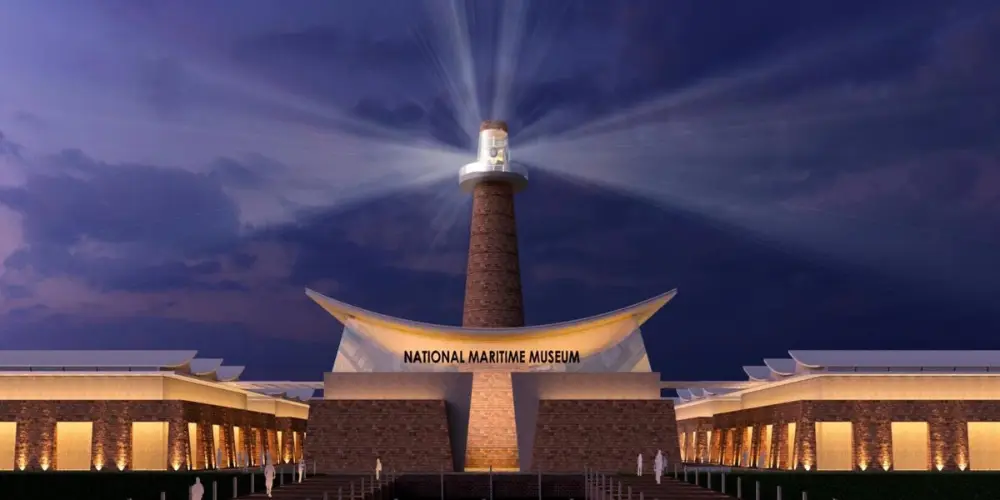
The galleries are only one part of the experience. NMHC also features real naval assets on display:
- INS Nishank – a decommissioned naval warship
- IL-38 SD aircraft – a maritime reconnaissance aircraft
- Sea Harrier – a carrier-based fighter jet
Visitors can also explore a recreated Lothal Town and enjoy boating within the complex.
Planned attractions include a lighthouse museum, a 5D dome auditorium, coastal states pavilions, a maritime and naval theme park, a climate change theme park and a nature conservation park.
Before you go, check the “Plan Your Visit” page on nmhc.in for current timings, tickets and which sections are open.
Why Lothal Matters for Dholera and Gujarat’s Future
NMHC is not just a cultural landmark. It is a major tourism and economic driver for the region.
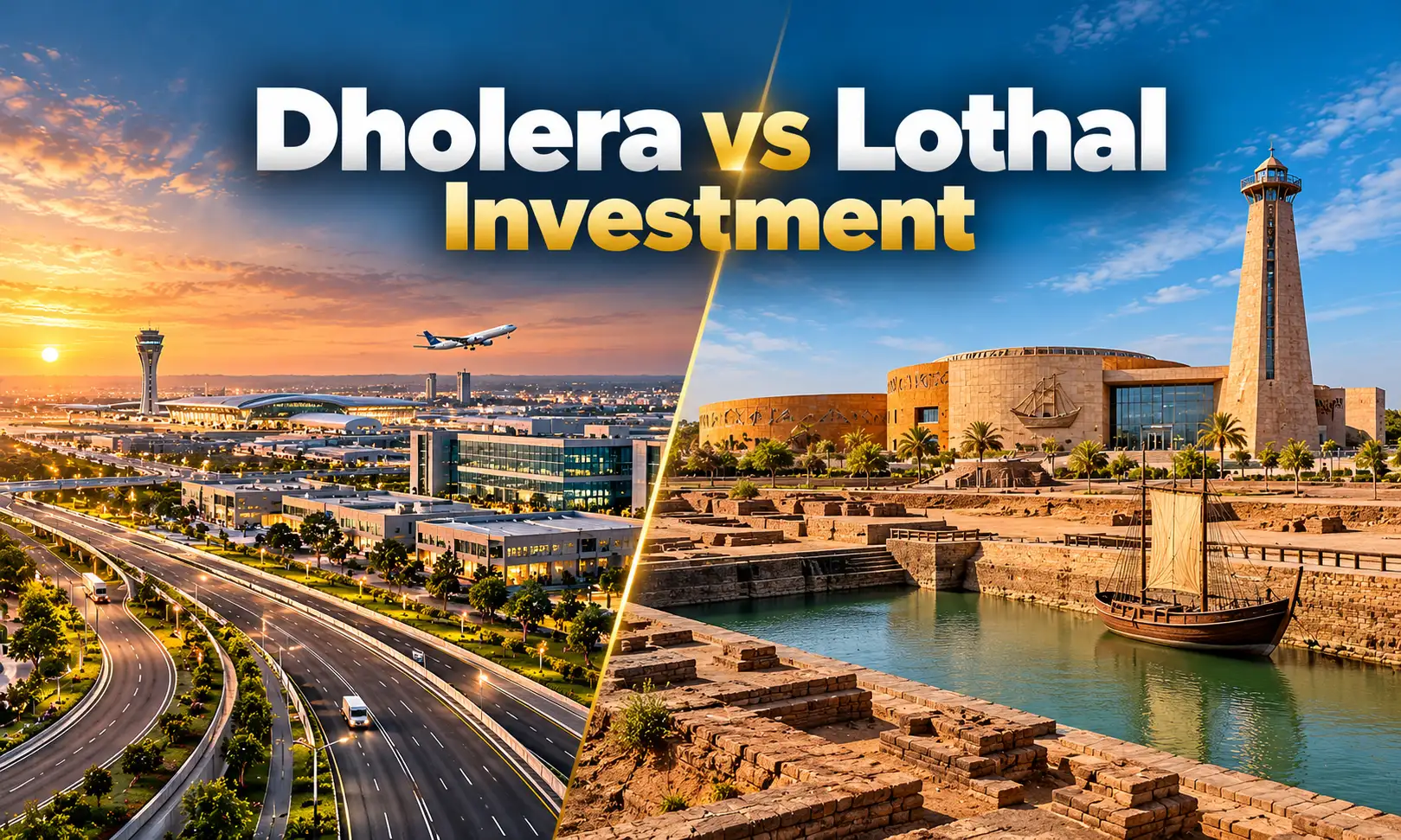
Lothal lies in the same part of Gujarat as the Dholera Special Investment Region, India’s first greenfield smart city. As NMHC grows, it is expected to bring more visitors, hotels, restaurants and local businesses to the area.
Large heritage projects like this often lift surrounding infrastructure, from roads to hospitality. For anyone tracking land and real estate around Dholera, NMHC is one more reason this corridor is worth watching.
History, tourism and new-age development are coming together in this part of Gujarat, and Lothal is right at the centre of it.
Frequently Asked Questions
The National Maritime Museum at NMHC Lothal has 14 galleries in total.
Galleries 1 to 6 are listed under the National Maritime Museum, while Galleries 7 to 14 are listed as future development.
It is located at Lothal, Saragwala, Gujarat 382230, in Ahmedabad district.
Lothal is home to the world’s earliest known man-made dockyard, built by the Harappans, making it the natural birthplace of India’s maritime story.
Yes. Gallery 12 is a dedicated Children’s Gallery with hands-on activities, art and workshops.